

I did not feel that I belonged in school as a learner. I didn’t have the words or consciousness for it then, but as early as Grade 1, I began to disengage, internalizing the idea that I was not capable of achieving academically. It took years, a lot of life lived, and sacrifice before I understood that I could learn and enjoy learning when the conditions were right.
When a child checks out early, that feeling can settle in and follow them for years, sometimes into adulthood. It can be very difficult to undo. [1]
I spent most of my early schooling in special education classes. When I returned to post-secondary education as an adult at age 30, I began to realize just how deeply those early messages had shaped me, not only my sense of ability and self-worth, but also my identity and sense of belonging. And because I was Black and biracial in mostly white schools, I did not experience my learning disability as something existing on its own. Race and disability intertwined in hallways, classrooms and most interactions.
I also don’t want to suggest that school was terrible all the time. Many of my special education teachers were caring and kind, and I believe they genuinely wanted to help me. There were parts of school that I genuinely enjoyed, particularly socially, and I developed good friendships, some of which I still have today. At the same time, being one of very few Black children made the social experience difficult in ways I did not yet understand. Racism, feeling different, and trying to find where I fit were always part of the picture.
After my experience in Grade 1, and everything that followed, I had disengaged in a way that I don’t think the school system knew how to reach. I still don’t know how much began with that experience in Grade 1 and how much developed through the years that followed.
When School Becomes a Place of Unbelonging
Shortly after I began kindergarten in Toronto, my family moved to a small town north of the city. I have two brothers, and we were, and still are, very close. My twin brother and I have always been inseparable in many ways. In Grade 1, both of us were held back, “failed” as people called it back then, and then we were physically separated from each other. Other than my older brother, there was maybe one other Black kid in the school.
Much of what happened in those early years of schooling was something my twin brother and I experienced together. We repeated Grade 1 together and were trying to make sense of the same messages about what we could and could not do. Being separated after that was about more than simply being placed in different classrooms or moved away from each other within a classroom. School had begun to divide an experience that we had largely faced together.
The racism started early. I heard slurs before I knew what they meant, sometimes leading to fights. Teachers and principals often knew what had been said, yet my parents were rarely contacted. No one ever sat with me to explain that those words were racist and wrong. Over time, that silence chipped away at my trust in the adults around me. I started to believe I was the problem, and I withdrew, disengaged, and stopped expecting the people in charge to understand or protect me. A part of that still sits with me today.
There is one time in particular in Grade 5 that I remember when another student called me the N‑word and we ended up in a fight. As with those earlier experiences, I remember how sharply the word landed, an attempt to make me feel small and less than. Looking back, I can’t remember a single physical altercation from childhood that didn’t start with someone using a racial slur. Those moments followed me into high school, inside school walls and out in our town. I wasn’t a violent kid. I was reacting to something that hurt me deeply.
Another student saw me and the other boy fighting and told the vice‑principal. We were hauled into the office, and once I told him what was said to me, he went into a rage at the other student for what he had called me. It was the first time that I really realized an adult understood how wrong this language was. I was terrified at his response and feared that I was going to get yelled at as well for fighting, but after confronting the student, he said calmly that I could leave. There was no real conversation about what happened, how I was feeling, or what I needed, and my parents were not called. I can see now that he was trying to defend me, but looking back, I can also see what was missing.
It’s impossible for me to separate these experiences: the racism, repeating Grade 1, being separated from my twin, and being placed in special education until Grade 9. I felt watched, different, and less capable long before I had the language to explain any of it.
Reports such as the Ontario Human Rights Commission’s Dreams Delayed: Addressing Systemic Anti-Black Racism and Discrimination in Ontario’s Public Education System [2] helped me understand that experiences like mine do not happen in isolation. What happens to a student can be shaped by many things, including the expectations placed on them, how their behaviour is interpreted, whether they feel they belong, and the support they are given. [3] I cannot know all the factors that shaped the decision to have my twin brother and me repeat Grade 1, but looking back, I also cannot separate that experience entirely from the broader context in which Black children were being understood, assessed, and educated.
These experiences also may raise a question about how well our education system responds to different ways of learning. Some students struggle not because they lack intelligence or capacity to learn, but because the learning environment does not provide the conditions they need to succeed. [4] Before considering how those conditions can change, it is worth thinking about what these moments may feel like for a child.
When Support Feels Like Separation
In my later primary grades, my mother asked that my brother and I spend more time in the regular classroom rather than in special education classes, as she knew how much we disliked being segregated. I remember being in the regular classroom and having my special education teacher come to the door to pull me out. I know now it was well‑intended, but those times felt humiliating. My peers stared as I left with the teacher I associated with “dysfunctional children,” as I understood it then. I needed support, but I didn’t want to be singled out.
Sometimes my embarrassment was misread as attitude by a special education teacher. This teacher would then call my parents, something I feared deeply because it came with consequences at home. Looking back, I can see how easily a student’s shame, anxiety, or self-protection can be misunderstood as defiance. For students with learning disabilities, support isn’t only about what is offered; it is about how it feels and whether it protects dignity. For me, punishment deepened disengagement and distrust.
That sense of being misunderstood followed me into high school. In a Grade 10 social science class, a teacher singled me out in an otherwise all-white class and asked me to explain what it was like to be Black, and how I would respond to a racial slur. I was terrified and did not yet have the language to articulate the hurt I carried from isolation and racism. I said simply that if someone called me a racial slur, I would respond physically. The teacher responded in a frustrated tone, “Well, you’ll be in handcuffs then!” In that moment, my attempt to describe how I had learned to protect myself was interpreted through a disciplinary lens. I felt exposed, misunderstood, and deeply ashamed.
The Educators Who Saw Something More
I also know what it feels like when educators see something more. Two of the most important teachers I had in high school were a Grade 10 welding teacher and a Grade 11 English teacher. My welding teacher once complimented my work, saying “If I could produce a weld like that, I would be rich.” I still remember that moment vividly today. It made me feel capable, skilled, and seen. My English teacher let me bring my interests into learning, including a presentation on rally racing, something I genuinely enjoyed. They didn’t lower expectations; they recognized my strengths and allowed me to be myself. After years of feeling different because I attended special education classes, that mattered deeply. They saw me without making me feel like something that needed to be fixed.
My path after high school was not linear. I dropped in and out of college for years, struggling to complete a diploma. A poor grade quickly became discouragement, and discouragement became disengagement. My confidence was fragile; I had learned to leave before school could confirm what I already feared about myself. It cost me a lot of money.
Finding My Way Back to Learning
Becoming a team leader responsible for an assembly line and a team of operators gave me clear evidence that I could lead, solve problems, and be trusted with responsibility. As I approached 30, however, I began seriously questioning where my life was going. Around that time, I started seeing a psychotherapist, the first time I had sought this kind of support. I entered that relationship with considerable distrust, but over time he helped me understand that school had been a source of hurt, and that returning to education might also become part of my healing.
I also wanted more options in my life, and I knew that without education I was likely to remain stuck. In some ways, I felt as though I was still sitting in that special education classroom years earlier, with my future being decided for me. The difference was that now I was an adult and could intervene in my own life in a way that had not been possible when I was a child. I could make the decision to return, seek out the support I needed, and see school through to the end. That realization became a turning point. I decided that I was going to do what I needed to do to succeed in school.
When I decided I wanted to go to university, I returned to college to finish the diploma I had started ten years earlier. To raise my GPA, I had to confront every failure, repeat, and withdrawal on my transcript. It was embarrassing. I still remember the program chair saying, “You again? You’re making this diploma a career!” It stung, but I retook each course one by one until my GPA was finally high enough for university admission.
Returning to college as an adult also meant facing the mandatory math course I had always dreaded. Math triggered anxiety, and I had learned to shut down whenever I felt pressured to understand something quickly. But this teacher was different; she was calm, patient, and fully committed to her students. She stayed with us until we understood the material because she genuinely believed we could get there. Her steady presence kept me engaged. It helped me see that difficulty with a subject doesn’t mean incapacity; sometimes a student simply hasn’t had the right conditions to learn.
When I finally entered university, I was ecstatic. I was about 30 years old, however, sitting beside students in their late teens while many of my friends were already building careers, getting married, and starting families. I was proud to be there, but I also felt behind. Being in university made the cost of my earlier disengagement feel real, not just academically, but in how far I felt from where I thought I could have been.
At the same time, accepting learning disability supports was not easy. It brought back old shame from special education classes. I did not want the support because I did not want to feel different again. But tutoring and separate-room testing were instrumental. They reduced barriers, and over time I found that I needed fewer of those supports as my confidence grew. Slowly, I began to rebuild confidence in myself as a learner, developing essential competencies that I missed in my early years of education. I completed university with honours and later earned a graduate degree. Although earning a degree did not completely rebuild my self-confidence and sense of self-worth, it was a critical step in challenging the belief that I was not capable. It was a proud moment.
Throughout my early education, my mother was my strongest advocate. Even when I had largely checked out of school, I knew she believed I was intelligent and capable. Despite all her efforts to find support for my brother and me, the testing, the tutors and other supports, one of the hardest realizations for me today is that there was probably little she could have done on her own to make me more engaged in the school system. But she saw something in me that I could not see in myself. I think that belief stayed somewhere deep inside me and, years later, helped give me the courage to return to education.
Throughout my university years, I remember how happy my mother was to see me receiving learning disability support and succeeding academically. I was over 30 years old, and seeing her pride affected me more than I expected. It helped me understand how deeply she had cared about me and my education all along, and how much she had fought and sacrificed for us.
What I Want Educators to Know
Today, after more than ten years working in human rights, equity, and belonging, including in a senior role in a school board, my lived experience still shapes how I understand dignity, belonging, identity, and access. Students who struggle early can still become leaders, advocates, and contributors when they are given time, tools, trust, and support.
Human rights guidance, research, and lived experience all point to the same message. Students identified as having disabilities deserve access, accommodation, and high expectations. Barriers and conditions within the environment can limit a student’s access and participation. Accommodation should focus on changing those conditions so students have a fair chance to succeed. [4]
What Educators Can Do
Sometimes small interactions with students can have a big impact on a student’s self-confidence and sense of belonging. These practices may seem small, but they can profoundly shape whether a student experiences support as something that helps them, or as another reminder that they are different.
1. Protect dignity when offering support
Students will remember how the support they received felt, rather than the assignment itself. The Ontario Human Rights Commission emphasizes that accommodation should respect a student’s dignity, privacy, autonomy, and individual needs. [5] Accommodation should protect privacy and dignity, not turn a student into a spectacle or special case. A quiet signal, a routine, or a check‑in can make a big difference. This would have worked for me tremendously and helped me feel seen and understood during my early years of education. The goal is to provide accommodation without reinforcing what Dr. Andrew B. Campbell describes as “un-belonging”, the feeling of being marked as fundamentally separate from the rest of the room. [1]
2. Read shutdown as communication, not attitude
As I experienced when being pulled out of class by my special education teacher, even subtle withdrawal, frustration, shutting down, or indifference can be a child’s way of protecting themselves from humiliation rather than defiance. When educators misread this and respond with disciplinary measures, it can deepen the student’s alienation. Before assuming opposition, consider what the student might be guarding themselves against. This matters especially for racialized students, whose learning needs can too easily be seen as behaviour problems rather than signs that they need support. Respond privately when possible. A simple question such as, “That looked frustrating. What would help next time?” may build trust and connection. [6]
3. Keep the expectation high, but change the pathway
Accommodations should provide students with a different route to meeting the same expectations, instead of changing what they are expected to achieve. The Learning Disabilities Association of Ontario has emphasized that meaningful accommodation is about removing barriers, not reducing expectations, so students can demonstrate their abilities fairly. [7]
I succeeded most when educators were flexible about the process, encouraged my creativity, and were firm in the belief that I could excel. That combination can completely change a student’s willingness to try. I experienced this when teachers held high expectations, stayed calm, and showed genuine confidence in my intelligence and capability.
4. Name strengths, not only struggles
It is important to name strengths deliberately and specifically. Students receiving special education services may hear about their deficits constantly, either directly or indirectly. A single moment of recognition can reshape a student’s sense of belonging. [1]
In Grade 10, my shop teacher looked at a weld I finished and said, “If I could do it as well as that, I’d be rich.” A year later, my English teacher praised the depth and video research in my presentation on rally racing, giving me an A for the assignment. Those moments made me feel seen, intelligent, and capable.
5. Bring a steady, calm presence to high-frustration moments
A busy classroom with competing demands does not always require one-on-one attention for every student. Sometimes, simply slowing down an interaction can make a difference. A calm teacher can help a student stay present enough to learn, and even a brief pause can help prevent shutdown. My college math teacher brought a calm, steady belief to her students, staying with the problem without panic or urgency. That presence kept me in the classroom long enough to learn.
6. Remember that race, identity, and disability can intersect
A learning disability is not experienced in isolation from a student’s identity and context. For Black students, academic struggle may occur alongside racism and bias within the school community, along with the ongoing work of trying to feel safe, seen, and understood. [4] As I described earlier, race, disability, and belonging were intertwined throughout my early schooling. Those experiences were impossible to separate, and I learned early what it felt like to be watched, different, and less capable.
Racism and bias can affect more than whether a student feels they belong. They can shape who gets referred for assessment, how a student’s behaviour is understood, and whether their abilities are fully recognized. For Black students with learning disabilities, race can shape both how their struggles are understood and how others respond to them. [3]
Behaviour can also be misread. Withdrawal, frustration, or self-protection may be connected to racism a student is navigating within a school community. [2] A student may be managing real processing challenges while also trying to function socially in a space where they do not feel they belong.
Educators can’t dismantle every systemic barrier, but they can examine their own perceptions:
- How behaviour is interpreted
- Who receives the benefit of the doubt
- Whether the classroom communicates safety and belonging [8]
Students are more willing to take academic risks when they feel respected, believed in, and safe. [1]
Not Yet, Not Less
Students can carry the feeling of how they were treated into adulthood. [1] Fortunately, they also carry the moments when someone saw their ability and had faith in them. Struggling with curriculum doesn’t mean a lack of intelligence. It means a student may need time, tools, and adults who are invested in them and believe in their capabilities.
An educator’s role is not to decide what a student is capable of becoming. It is to help students hold onto their dignity, believe in their own capabilities, and have the support they need to keep learning.
References
[1] Campbell, A. B., & Spooner, N. (2025). Cultivating belonging in schools: Nurturing connections, fostering relationships, and embracing inclusion. In I. Bogotch & C. M. Shields (Eds.), Second international handbook of educational leadership and social (in)justice. Springer. https://doi.org/10.1007/978-3-031-56275-4_82-1
[2] Ontario Human Rights Commission. (2025). Dreams delayed: Addressing systemic anti-Black racism and discrimination in Ontario’s public education system. https://www.ohrc.on.ca/en/dreams-delayed-addressing-systemic-anti-black-racism-and-discrimination-ontarios-public-education
[3] Eizadirad, A., & Sider, S. (2025). Seeing the whole student: Addressing bias in special education supports. Learning Disabilities Association of Ontario. https://www.ldatschool.ca/seeing-the-whole-student-educator-guide
[4] Ontario Human Rights Commission. (2018). Policy on accessible education for students with disabilities. https://www.ohrc.on.ca/en/policy-accessible-education-students-disabilities
[5] Ontario Human Rights Commission. (2004). Guidelines on accessible education: Principles of accommodation. https://www.ohrc.on.ca/en/guidelines-accessible-education/principles-accommodation
[6] School Mental Health Ontario. (n.d.). Noticing signs of emerging student mental health concerns. https://smho-smso.ca/early-identification-and-student-support/noticing-signs-of-emerging-student-mental-health-concerns/
[7] Learning Disabilities Association of Ontario. (2025). Submission to the Auditor General of Ontario: Special Education Policy and Program Delivery Review. https://www.ldao.ca/ldao-submission-to-the-auditor-general-report/
[8] School Mental Health Ontario. (2020). Supporting mentally healthy conversations about anti-Black racism with students: A resource for educators. https://smho-smso.ca/wp-content/uploads/2020/09/Conversations-Anti-Black-Racism.pdf
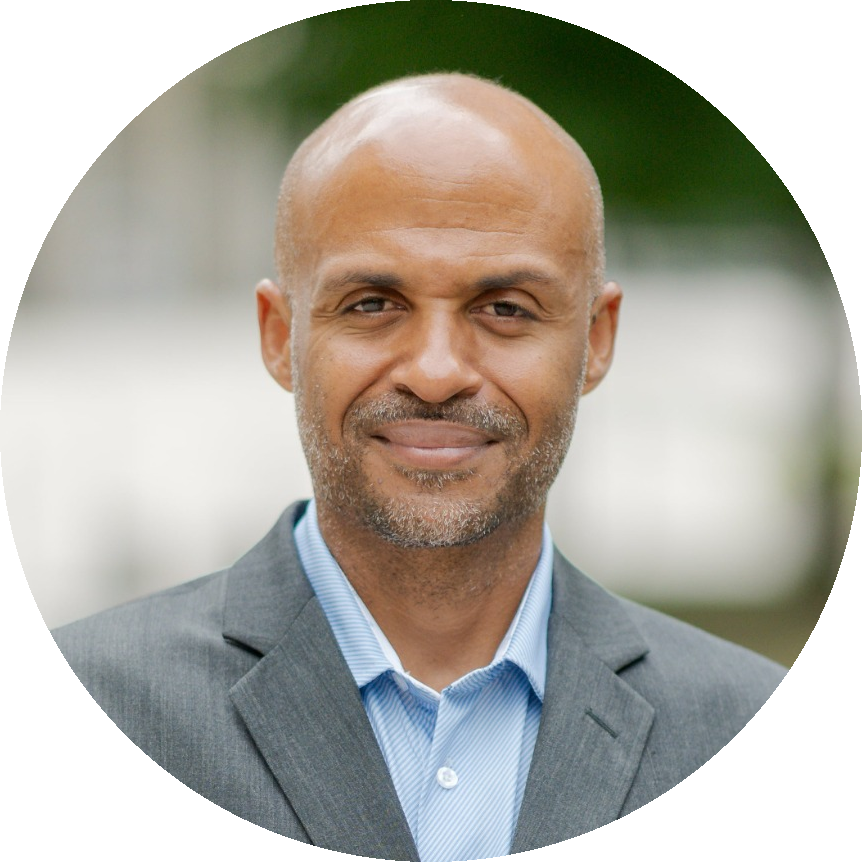
About the Expert – Michael Regis
Michael Regis is an Equity, Diversity and Inclusion Advisor with the Windsor-Essex Catholic District School Board, where he supports system-level work related to equity, human rights, belonging, and student success. He holds a Master of Arts in Dispute Resolution from the University of Victoria and a Bachelor of Arts in History and Law & Society from York University.
Michael’s work has focused on equity, inclusion, human rights, community engagement, leadership, and organizational change. Drawing on both his professional experience and his own journey as a student identified with a learning disability, he is particularly interested in how educators can create conditions of belonging that preserve students’ dignity, confidence, and sense of possibility.
Subscribe to the LD@school newsletter
Stay connected with evidence- and practice-informed
resources designed for the classroom.

Powered by LDAO
LD@school is a signature initiative of the Learning Disabilities Association of Ontario (LDAO), a registered charity and provincial leader in evidence-informed, inclusive, and accessible education.
For over 60 years, LDAO has supported children, youth, and adults with learning disabilities (LDs) and related conditions such as ADHD.
Explore LDAO’s signature platforms:
TA@l’école – French-language resources and professional learning for educators that integrate evidence-informed instruction with equity, identity, and belonging.
LD@home – Family-focused tools and guidance that strengthen partnerships between home and school.
LD@work – Resources supporting transition, self-advocacy, career development, and workplace inclusion.
LD@learning – Online courses and professional learning for individuals supporting learners with LDs and ADHD.
© 2026 Learning Disabilities Association of Ontario (LDAO).
This resource may be used and shared within educational settings for non-commercial purposes. It may not be modified or used for commercial gain. See LDAO.ca for full Terms of Use.