

What Makes an IEP Effective?
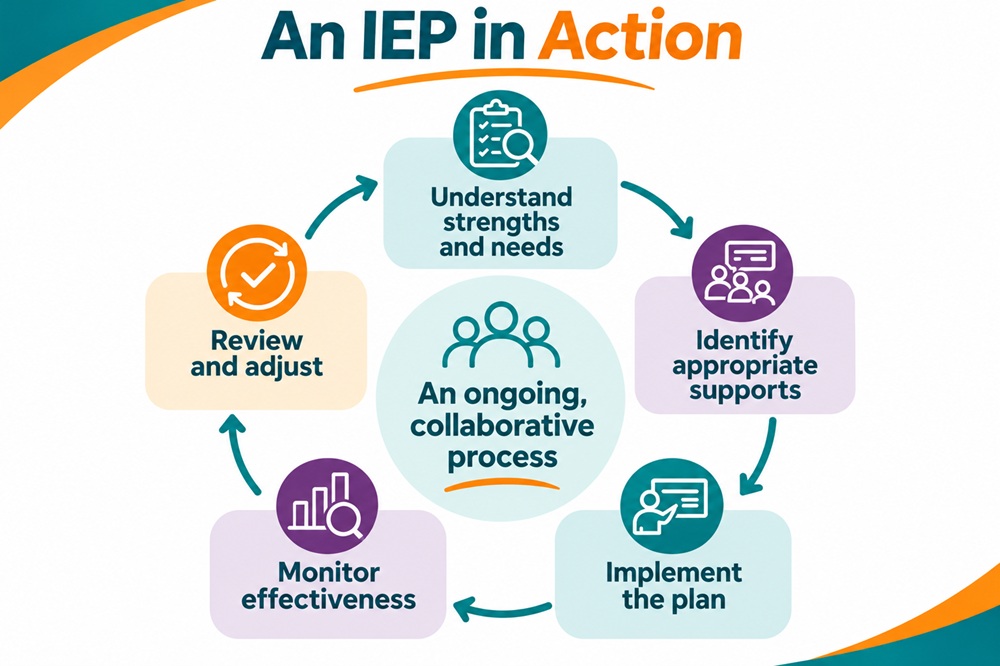
An Individual Education Plan (IEP) is more than a document outlining accommodations or special education programs and services. When thoughtfully developed and consistently implemented, it is a powerful tool for supporting student learning and success. An effective IEP builds on a student’s strengths, identifies their learning needs, and outlines the supports and strategies that help remove barriers to learning, participation, and achievement.
An effective IEP should:
- Build on the student’s strengths and needs, drawing on assessment information, classroom observations, and the perspectives of the student and their family.
- Identify specific, meaningful accommodations and supports that help the student access the curriculum and demonstrate their knowledge and skills.
- Establish appropriate learning expectations, including modified or alternative expectations when required, while maintaining grade-level expectations when accommodations alone are sufficient.
- Guide everyday teaching and assessment, ensuring that the strategies outlined in the plan are understood and consistently implemented.
- Encourage student voice and self-advocacy, helping students understand their learning needs, recognize effective supports, and participate in decisions about their learning.
- Evolve through ongoing monitoring and review, using evidence of student progress to determine what is working and where adjustments may be needed.
The true power of an IEP lies not simply in having a plan, but in how effectively that plan is put into practice. When educators, students, and families share a clear understanding of the supports a student needs, the plan can help create meaningful opportunities for learning, confidence, and independence. Misconceptions about what an IEP is, who it serves, and how it should be used can get in the way of that purpose.
Common Misconceptions About IEPs
Misconception 1: An IEP requires formal IPRC identification
The Reality
In Ontario, a student does not have to be formally identified as exceptional by an Identification, Placement and Review Committee (IPRC) to have an IEP. A school board may develop an IEP when it determines that a student requires special education programs or services to attend school, achieve curriculum expectations, or demonstrate learning.
Why It Matters
Support should be guided by a student’s learning strengths and needs, not delayed until a formal identification process is complete. Further assessment can deepen understanding of a student’s needs without becoming a prerequisite for providing support. LDAO’s discussion brief on assessment pathways explores the importance of connecting early support, assessment, and ongoing follow-up.
Misconception 2: A diagnosis determines an IEP
The Reality
An IEP is an educational plan developed around a student’s individual strengths and needs, rather than being determined by a medical or psychological diagnosis. Classroom observations, educational and professional assessments, and the perspectives of students and their families should all inform its development. Together, this information helps educators identify the accommodations, programs, and services needed to support the student’s learning and achievement.
Why It Matters
Students with the same diagnosis may have very different learning strengths and needs, so they may require different supports. Effective educational planning focuses on understanding how each student learns, identifying barriers to learning, and determining which strategies and accommodations will help the student succeed.
Misconception 3: An IEP means lower expectations or a guaranteed grade
The Reality
Having an IEP does not mean a student is working below grade level. For students with learning disabilities, the emphasis should be on supporting achievement of grade-level expectations through appropriate accommodations and instruction. Accommodations such as extra time and assistive technology do not change those expectations. Modifications, on the other hand, change the grade level, number, or complexity of curriculum expectations. For students with learning disabilities, lower-grade expectations should be a carefully justified exception, considered only when there is clear evidence that appropriate accommodations and targeted instruction have been consistently implemented, monitored, and adjusted without enabling the student to demonstrate grade-level learning.
An IEP does not guarantee a particular grade. A student’s mark reflects their achievement of the applicable curriculum expectations, whether regular or modified.
Why It Matters
Unnecessary modifications can limit what students have the opportunity to learn, while appropriate accommodations can remove barriers without lowering expectations. Families and educators need to understand both the supports a student receives and the expectations against which their achievement is assessed. This helps ensure educational decisions reflect students’ actual learning needs rather than assumptions about their abilities.
Misconception 4: Parents can formally appeal an IEP
The Reality
In Ontario, there is no formal appeal process specifically for the content of an IEP. Formal appeals through the IPRC process apply to decisions about a student’s identification and placement, rather than the accommodations, programs, or services outlined in the IEP. If parents disagree with the plan, they should begin by discussing their concerns with the classroom teacher, followed by the special education resource teacher, school principal, or school board staff as needed to request a change and come to a resolution. Families can also ask about their school board’s procedures for resolving IEP disagreements.
Why It Matters
The absence of a formal appeal process does not mean families have no voice in decisions about their child’s education. Meaningful family participation should not depend on parents understanding complex school processes or knowing how to advocate effectively. School teams have a responsibility to make information accessible, invite family perspectives, and work collaboratively to address concerns. Concerns about accommodations or supports that are missing, ineffective, or not being provided should be addressed promptly. Where concerns involve a failure to accommodate a student’s disability-related needs, protections under Ontario’s Human Rights Code may also apply.
Misconception 5: An IEP guarantees an educational assistant
The Reality
Having an IEP does not automatically mean that a student will receive support from an educational assistant (EA), or that an EA will be assigned to them individually. An educational assistant is only one possible form of support and may work with several students rather than one student exclusively. When EA support is identified in an IEP, the type of support, its location, and planned frequency or intensity should be clearly documented.
Why It Matters
Support should be determined by what the student needs to access learning, participate meaningfully, and develop independence, rather than by an assumption that an IEP comes with an EA. Families should understand which supports are being provided, how they will be delivered, and whether they are meeting the student’s needs.
Misconception 6: The “IEP” box is always checked on report cards
The Reality
Whether or not a student has the IEP box checked on their report card depends on the type of programming that is provided to the student. For subjects or courses in which a student receives accommodations only, the box is not checked because marks are based on the regular curriculum expectations. When expectations are modified, the IEP box is checked for that subject or course to indicate that the student’s achievement is being evaluated against modified expectations. Alternative programs are generally reported separately, often through an additional report accompanying the provincial report card.
Why It Matters
An unchecked IEP box does not mean that a student no longer has an IEP or is no longer receiving accommodations. Understanding this distinction helps families interpret report cards accurately and recognize whether their child’s achievement reflects regular curriculum expectations or modified expectations.
Misconception 7: An IEP limits a student’s future pathways
The Reality
Having an IEP does not, by itself, restrict a student’s opportunities for further education, training, or employment. The important distinction is between having an IEP and the educational decisions made along the way. Course selections and modifications to curriculum expectations can affect prerequisites, eligibility for secondary school credits, and future educational opportunities.
Why It Matters
Students should have opportunities to explore pathways that reflect their strengths, interests, and aspirations, rather than having options narrowed because they receive special education support. Families and students need to understand the implications of course selections and programming decisions, particularly when those decisions could limit future choices. Educators, guidance staff, students, and families should work together to keep pathways open wherever possible.
Misconception 8: An IEP is permanent and unchanging
The Reality
An IEP is a working document, not a plan that is written once and left unchanged. It should be implemented, monitored, and reviewed as the student’s strengths, needs, and progress change. This includes examining whether accommodations and supports are being provided and whether they are effective. When modified or alternative expectations are included, those expectations must also be reviewed and updated based on the student’s progress. For students without formal IPRC identification, an IEP may no longer be necessary if special education programs or services are no longer required. For students formally identified through an IPRC, an IEP remains required while that identification is in place.
Why It Matters
An IEP is only effective when it reflects the student’s current learning needs and guides everyday educational practice. Vague descriptions, such as “check-ins,” can make it difficult to understand what support is being provided or evaluate whether it is working. Regular review allows educators, students, and families to identify what is effective, what needs to change, and whether different supports are required. This also creates opportunities to address gaps in implementation before assuming that a student needs different or more intensive supports.
From Planning to Practice: Making IEPs Effective
An IEP is most useful when it supports everyday decisions about teaching, assessment, and student learning. Educators, students, and families need opportunities to discuss how supports are working and what the student is experiencing. The following questions can help make those conversations practical and purposeful.
Questions to Guide Ongoing Review
- Does the IEP accurately reflect the student’s current strengths, needs, and learning experiences?
- Are the accommodations and supports clearly identified and consistently implemented?
- What evidence tells us whether the strategies and supports are helping the student learn, participate, and demonstrate their knowledge?
- How are the student and family involved in reviewing progress and identifying what may need to change?
These questions can guide meaningful conversations throughout the school year, rather than simply during scheduled IEP reviews. When educators, students, and families use the IEP as a shared guide for planning, instruction, and reflection, it becomes a tool for strengthening learning, building independence, and keeping future opportunities open.
Additional LD@school Resources
For further guidance on professional collaboration, family-school partnerships, assessment, and future educational pathways, explore these LD@school resources:
- Professional Collaboration to Support Students with Learning Disabilities (2026)
Explores how educators can use professional judgment, collaboration, and Ontario education policies to strengthen student-centred planning and support. - Supporting Your Child with Learning Disabilities (LDs) and ADHD (2026)
Provides families and caregivers with guidance on understanding school policies, navigating supports, building school partnerships, and advocating for their children. - Understanding Psychoeducational Assessments (2026)
A video series explaining how psychoeducational assessments identify learning strengths and needs and inform effective educational planning and supports. - Navigating the Transition to Post-Secondary for Students with Learning Disabilities (2026)
Provides guidance on transition planning, accommodations, self-advocacy, and preparing students for post-secondary education.

Powered by LDAO
LD@school is a signature initiative of the Learning Disabilities Association of Ontario (LDAO), a registered charity and provincial leader in evidence-informed, inclusive, and accessible education.
For over 60 years, LDAO has supported children, youth, and adults with learning disabilities (LDs) and related conditions such as ADHD.
Explore LDAO’s signature platforms:
TA@l’école – French-language resources and professional learning for educators that integrate evidence-informed instruction with equity, identity, and belonging.
LD@home – Family-focused tools and guidance that strengthen partnerships between home and school.
LD@work – Resources supporting transition, self-advocacy, career development, and workplace inclusion.
LD@learning – Online courses and professional learning for individuals supporting learners with LDs and ADHD.